
Puranar, Makkhali Gosala and the Ancient Ajivika Philosophy of Eelam
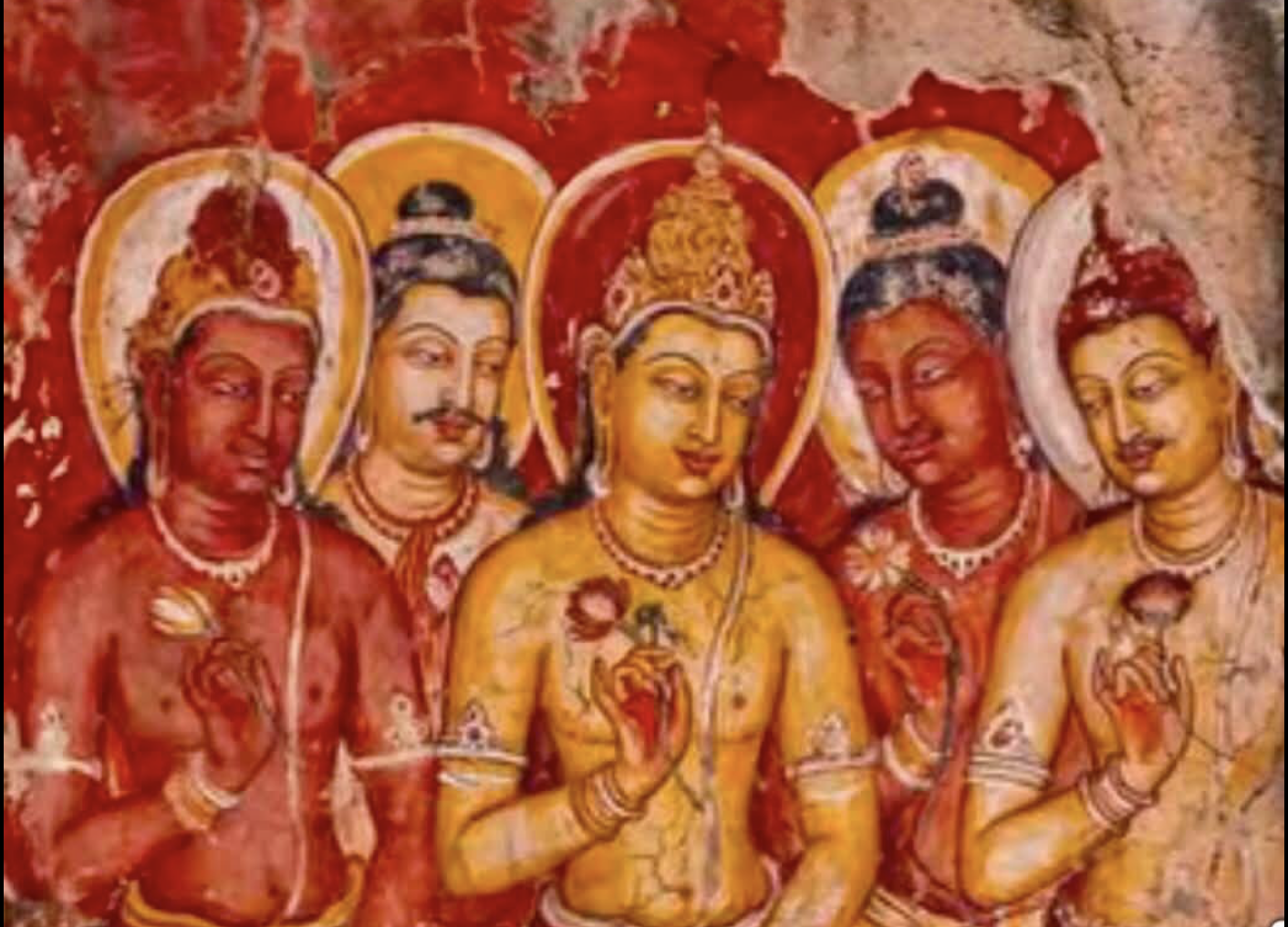
Puranar, Makkhali Gosala and the Ancient Ajivika Philosophy of Eelam
The very meaning of Puranam is completeness or perfection. Thiruvalluvar refers to such a being as Vaal Arivan — the One Possessing Perfect Knowledge. He uses this expression to describe the Aadhi Bhagavan, the Primordial Divine Being who attained such a state of perfection.
In the Tamil Buddhist epic Manimekalai, associated with Mahayana Buddhism, verse 27:112 refers to the Ajivika teacher through the expression:
“Varambil Arivan Irai Nool Porul”
This means, “Our Lord is the One who possesses limitless knowledge.”
That this refers to Makkhali becomes evident later in verse 27:165, which states:
“Makkhali Noolin Vagaiyithu Venna”
This indicates that the philosophical teachings being discussed belong to Makkhali.
Consequently, there are reasons to consider that Puranar and Makkhali were the same individual.
Ancient inscriptions from Eelam provide further support for this interpretation.
These inscriptions contain references such as Bhagavatha Mogali Gothama Samana Buddha, which appear to identify Makkhali.
Furthermore, inscriptions from Eelam indicate that a place of worship dedicated to the sacred feet of Puranar was established at the summit of Sivanolipatha Malai, also known as Sumanakoodam.
The deity referred to as Sumana Saman, who is traditionally associated with the establishment of this sacred place, has been identified as King Dhamma Raja, the eldest among the ten sons of King Abhaya, who belonged to the Pandyan royal lineage of Eelam.
This strengthens the possibility that Puranar was indeed Makkhali.
Research into Makkhali through the inscriptions of Eelam suggests that he was the Pandyan king Gamani Uthi.
He was the first ruler identified in the inscriptions of Eelam by the title Devanapiya Gamani Uthi.
However, while no temple dedicated specifically to Gamani Uthi has been identified anywhere in Eelam, the temple associated with Puranar has been given particular prominence.
This is presented as further evidence that Makkhali and Puranar were the same person.
According to the inscriptions, before Makkhali renounced worldly life, he was a Pandyan ruler with two wives: a princess bearing the title Abhi Anurathi and a woman named Sumana Devi.
It is therefore possible that these two women were later known as Puranai and Porkalai.
The sacred tooth relic casket associated with Puranar was regarded as an extremely holy object in ancient Eelam.
It was originally venerated at a religious site in Anurathapuram and is now worshipped at the Dalada Maligawa in Kandy.
According to this interpretation, Puranar was born in Eelam.
This is why some Sinhalese people today promote the theory that the Buddha was born in Eelam.
The Buddha referred to in this interpretation was Puranar, also known as Makkhali, a philosopher associated with Ajivika, an ancient Tamil philosophical tradition based on the doctrine of Akriyavada.
However, a powerful wall of mythological and epic narratives has been constructed, preventing people from recognising this historical and philosophical identity.
They are unable to recognise that the deity they worship as Jayanayaka is none other than Ayyanar, identified here with Puranar.
The Tamil Buddhist epic Manimekalai, associated with Mahayana Buddhism, describes Puranar as:
“Piravi Pini Maruthuvan” — the Healer of the Disease of Rebirth.
The epic also states that he appeared to prevent a conflict over the sacred Mani Asanam between the Valuthi and Maran dynasties, both belonging to the Pandyan royal lineage of Eelam.
This suggests that the Ayyanar worship associated with Ajivika philosophy, which had been deeply rooted in ancient Tamilakam from approximately the sixth century BCE, was subsequently incorporated into Mahayana Buddhism.
Mahayana Buddhists adopted these Ajivika deities into their own religious tradition and transformed them into objects of Buddhist worship.
Later, during the reign of Mahasena, these places of worship were fully transformed into Mahayana Buddhist religious centres.
Mahayana Buddhism was practised not only in the Northern and Eastern regions of Eelam but throughout the entire island.
The Buddhist statues and the Vallipuram Gold Plate inscription visible today are presented as remnants of this Tamil Buddhist heritage.
However, the sacred footprints, ancient inscriptions, coins, and wall paintings that existed before the emergence of Mahayana Buddhism are argued to have originally belonged to the Ajivika tradition.
The Mahavamsa, which describes these remains as Buddhist symbols, was written in the sixth century CE.
Like Manimekalai, it incorporated elements of the Ajivika tradition and reinterpreted that ancient heritage within the framework of the Theravada Buddhism of its time.
The Philosophical Teachings of Purana Kassapa
Only a limited number of references to the teachings of Purana Kassapa survive, primarily in texts belonging to rival religious traditions.
His teachings are compatible, according to this interpretation, with theories of atoms and the fundamental nature of matter.
However, these ideas were not properly understood and were instead ridiculed.
Even today, religious followers often treat opposing religious philosophies in the same manner.
Buddhist texts frequently mock Puranar for declaring himself to be all-knowing.
Such criticism also appears in the Tamil Buddhist epic Manimekalai.
In the epic, Manimekalai approaches an elderly Ajivika philosopher and asks him to explain his philosophical teachings.
The Tamil term Puranar is interpreted in some commentaries as meaning an elderly person.
However, it is possible that the original palm-leaf manuscripts contained the name Puranar, rather than a general reference to an old man.
After listening to the elderly philosopher explain the Ajivika teachings contained in Makkhali’s text, Manimekalai describes his explanations as a “Sottrathumaatra Thodarchi” — a sequence of confused or contradictory statements.
She then proceeds to meet a philosopher belonging to the Nigantha, or Jain, tradition.
Was Manimekalai unable to understand the elderly philosopher because his speech was confused by old age?
The Tamil scholar U. V. Swaminatha Iyer explains this expression in his commentary as referring to contradictions between the earlier and later statements of the Ajivika philosopher.
He uses this interpretation to explain why Manimekalai rejected the philosopher’s arguments.
Purana Kassapa’s Theory of Actions and Their Consequences
Puranar believed that a person’s good and evil actions do not produce consequences that attach themselves to the individual.
In his philosophical understanding, the human being is a combination of body and life, composed of aggregates of atoms and material substances.
Buddhist texts that criticised his teachings interpreted this to mean that even if someone committed murder, no moral evil or consequence would attach to the person.
However, this interpretation may have resulted from a misunderstanding of his philosophical position.
His ideas did not agree with the teachings of Buddhism, which emphasises that good intentions produce good actions.
Nor did they agree with Jainism, which teaches that virtuous qualities and good actions lead towards liberation.
They were also incompatible with later Vedic Brahmanical beliefs, which hold that good actions produce merit and evil actions produce sin.
These traditions may have failed to understand Puranar because their primary concerns were human conduct, morality, religious observance, and liberation rather than atomic philosophy.
How, then, should Puranar’s teachings be understood?
Consider the example of murder.
If a person commits murder, the act does not alter the fundamental atoms composing the murderer’s body.
Those atoms remain material substances.
According to modern scientific understanding, the act of committing murder does not, by itself, alter the mass or electric charge of the electrons within the atoms of the person’s body.
This analogy is offered as a way of understanding Puranar’s philosophical position.
The Lost Ajivika Text: The Nine Rays of Light
In Manimekalai, verse 27:165 contains the expression:
“Makkhali Noolin Vagaiyithu Venna.”
Verse 27:112 contains:
“Varambil Arivan Irai Nool Porul.”
However, neither verse explicitly provides the title of the philosophical text.
It was U. V. Swaminatha Iyer who referred to the work as Navakathir.
A similar reference appears in the Tamil Jain literary work Neelakesi:
“Endralum Makkhali Thaane Iraiyini, Onpathu Vaangathir Yaamudaiyana.”
Here, the expression Onpathu means nine.
Did the scholar known as Tamil Thatha, U. V. Swaminatha Iyer, replace the Tamil word Onpathu with the Sanskrit-derived word Nava?
Or was the original title of this now-lost scientific and philosophical work something entirely different?
This raises questions about the true name and nature of the ancient Ajivika text.
Liberation, Karma and Atomic Philosophy
- The concept of spiritual liberation
Attaining liberation, eliminating karma, reaching the highest yogic state beyond the seven levels, attaining Moksha, entering Vaikuntha, and even the modern concept of reaching Kailasa are all ideas that emerged after people had forgotten the original atomic philosophy.
- Lord Krishna and atomic philosophy
In the Bhagavad Gita, Lord Krishna explains that killing destroys the physical body but not the immortal soul.
This teaching can be interpreted through the principles of atomic philosophy.
From this perspective, Lord Krishna may be regarded as the Puranar of Vaishnavism and Vedanta.
- Lord Shiva as Puranar
In the Tamil film Thiruvilaiyadal, Lord Shiva declares:
“We know everything — what is understood and what is not understood, what is known and what is unknown, what has been born and what has not been born.”
Based on this concept of complete knowledge, Lord Shiva may be regarded as the Puranar of Saivism.
The Fundamental Principles of Ajivika Philosophy
Let us first examine the philosophical doctrines attributed to Ajivika in the Tamil literary work Neelakesi.
- The Supreme Teacher possesses perfect knowledge. The leader of Ajivika is one who possesses complete and perfect knowledge. Therefore, he is called Puranar. He is beyond speech and action.
- He is beyond ageing and death. His appearance and disappearance resemble the appearance and disappearance of a rainbow. These phenomena cannot be fully understood or explained.
- The sacred text of Ajivika is called the Nine Rays of Light. This sacred teaching was revealed by the Supreme Teacher and transmitted through two divine beings known as Okkali and Okali.
- The universe consists of five fundamental substances. These are earth, water, fire, air, and life. Each consists of its own distinct type of atoms.
- The five fundamental substances possess different inherent natures. Although they differ in their essential characteristics, they do not possess independently acquired qualities.
- Each fundamental substance has its own characteristics. Earth possesses touch, taste, colour, and smell, but not sound. Water possesses coolness, fire possesses heat, air possesses sound, and life possesses consciousness. These characteristics belong to the atoms of the fundamental substances rather than to the composite objects formed from them.
- Nothing that exists can be destroyed, and nothing nonexistent can newly come into existence. Existing things may become visible, like objects floating on the surface of water, or remain hidden, like objects submerged beneath it.
- Moments exist, but continuous time does not. Ajivika philosophers recognise individual moments of existence but reject the concept of time as an uninterrupted continuum.
- Ajivika ethics are based on worldly life and happiness. The ethical system of Ajivika is directed towards human enjoyment and worldly existence. It is presented as an ethical philosophy consistent with rational thought.
The Philosophical Criticisms Presented in Neelakesi
Let us now examine the counterarguments raised by Neelakesi against these Ajivika doctrines.
- How was the sacred text revealed?
If your Supreme Teacher never opened his mouth to speak, how did the sacred scripture called the Nine Rays of Lightcome into existence?
If you claim that two other divine beings revealed it, did those beings possess perfect knowledge?
If they possessed perfect knowledge, how were they able to speak when the Supreme Teacher remained silent?
If they did not possess perfect knowledge, would that not undermine the truth and authority of the sacred teachings?
- Why did Makkhali remain inactive?
Even ordinary people like us are moved by compassion to help others.
Why, then, did Makkhali, who supposedly possessed perfect knowledge, remain inactive?
- Is inactivity evidence of perfect knowledge?
If remaining inactive is a sign of perfect knowledge, should we consider infants who cannot speak, people who are unable to hear or speak, trees, and mountains to be possessors of perfect knowledge?
- Was the Supreme Teacher lifeless?
If he did not even move his limbs, was he a lifeless being?
Or was he merely pretending?
- How could a silent teacher explain philosophical truths?
If he never spoke, how could he explain the nature of the five fundamental realities and the principles governing good and evil actions?
- How could desire arise in an inactive person?
If the Supreme Teacher remained completely inactive, how could the desire for worldly pleasures arise in his life?
- Are the fundamental substances truly distinct?
You claim that only earth possesses colour, taste, smell, and touch.
However, if the other three material substances also possess these characteristics, should they not also be classified as earth?
Would this not mean that there are only two fundamental substances rather than five?
Furthermore, are the sensory organs that perceive these characteristics also made of earth?
- Why is darkness not considered a substance?
Darkness is something that can be perceived through the senses.
Why, then, have you not included darkness among the fundamental substances?
- How can substances possess inherent natures but no qualities?
You claim that fundamental substances possess inherent characteristics.
How, then, can you also claim that substances have no qualities?
- Does transformation not exist?
You argue that reality is fundamentally unchanging.
But when gold is transformed into jewellery, or bronze is fashioned into a vessel, are these not examples of change?
Even in grammar, words change according to case and grammatical combination.
- How can development exist without change?
You recognise four aspects of development:
- The necessity of development.
- The stages through which development occurs.
- The ultimate limit or final state of development.
- The duration of development.
If you maintain that change does not exist, how can you classify and describe so many different forms of change?
- How can enormous life-entities exist within small bodies?
You claim that living entities extend to a height of 400 yojanas, with corresponding length and width.
How can such enormous entities exist within comparatively small physical bodies?
- What happens after all living beings attain liberation?
If every living being eventually attains liberation, would worldly existence not come to an end?
To answer this question, you have developed the doctrine of Mandala Veeduperu, or cyclical liberation.
According to this doctrine, living beings return to the beginning of worldly existence even after attaining liberation.
However, this explanation demonstrates that you have not fully understood the implications of the existence of countless living beings.
- Do the fundamental substances always move in fixed directions?
You claim that earth and water naturally move downwards, while fire and life move upwards.
However, you have failed to observe that fire can also move downwards under certain conditions.
If living entities continuously move upwards, should they not eventually reach the Moon and the regions of the stars?
You also claim that air moves sideways, yet you have failed to observe that air moves both upwards and downwards within the human body.
- How can development involve time if time does not exist?
You deny the existence of continuous time.
Yet you include the passage of time among the fundamental aspects of development.
How can these two positions be reconciled?
- Why practise fasting and austerities if causation is denied?
If you reject the relationship between cause and effect, why do you practise fasting, penance, and religious austerities?
- Can appearance and disappearance occur without causes?
You claim that appearance and disappearance occur naturally, without any underlying cause.
You also attempt to explain the appearance of your Supreme Teacher as a causeless phenomenon.
To support this argument, you compare his appearance and disappearance to those of a rainbow.
However, this example actually demonstrates your lack of understanding of cause and effect.
A rainbow appears when sunlight interacts with moisture in the atmosphere.
Its appearance is therefore not without a cause.
Neelakesi’s Philosophical Victory
Through these counterarguments, Neelakesi is presented as having defeated the philosophical positions of the Ajivika tradition.
The literary account concludes by stating that Neelakesi successfully persuaded Puranar to accept the principles of Jainism.
Translation by Hari
0 Comments