Eelam: The Ancient Original Name
By Dr. Siva Thiagarajah
Introduction
Among some scholars and academics, a mistaken belief persists that the term “Eelam” was created by the separatist movement that emerged on the island during the twentieth century.
This research article presents inscriptional, pottery-inscription and literary evidence demonstrating that Eelam has been used as an indigenous Tamil name for the island for more than 2,200 years.
1. The Ancient Names of the Island
The three earliest names used to refer to the island are:
- Lanka — mentioned in the Ramayana.
- Tamraparni — recorded in Emperor Ashoka’s inscriptions.
- Eelam — recorded in the Thiruparankundram inscription.
All three names were in use before the Common Era.
The origin of the name Lanka
Among these three names, Lanka is considered the oldest.
In the Munda languages, the word Lanka means an island surrounded by water.
These languages belong to the Austroasiatic language family, which developed from ancient Austric languages spoken by early Homo sapiens populations across South Asia, Southeast Asia and Australia.
Approximately 7,000 years ago, at the end of the Ice Age, when the island became separated from India, the name Lanka may have been given by Austroasiatic-speaking people who were among the ancestors of some of the island’s Vedda communities.
The author argues that the name Lanka has no origin in either the Dravidian or Indo-Aryan languages.
Therefore, describing Lanka as originally a Tamil, Sinhala, Sanskrit or Pali name would, according to this interpretation, be speculative.
Numerous words from the Munda languages are found in Dravidian languages and Sanskrit.
Valmiki, the author of the Ramayana, adopted the island’s Munda name, Lanka, in his epic.
In Tamil, Lanka became Ilangai.
In 1972, the government changed the island’s former official name, Ceylon, to Sri Lanka.
The name Tamraparni
During the third century BCE, Emperor Ashoka recorded the name of the island as Tamraparni in Prakrit in his inscriptions.
In Pali, the name became Tambapanni.
Greek writers recorded it as Taprobane.
It is uncertain whether Tamraparni was commonly used in the everyday speech of the island’s inhabitants.
By the third century CE, names such as Heladivi and Sihaladivi were in use.
The development of the name Sihaladivi
One explanation has been proposed for the origin of the name Sihaladivi, meaning the island of the Sinhalese.
The term Hela was already used to refer to the island, its inhabitants and their language.
Just as Lanka is called Sri Lanka today, the island known as Hela was once called Sri Hela.
In Pali, Sri Hela became Sihela or Sihela, eventually developing into Sinhala.
According to this interpretation, Mahanama, the author of the Mahavamsa, did not understand this linguistic development and instead introduced the story that the Sinhalese descended from a lion to explain the origin of their name.
Eelam as an ancient Tamil name
Another original Tamil name for the island is Eelam.
The name appears in the Thiruparankundram inscription, dated to the second or first century BCE.
It has survived into the present day.
The principal evidence supporting this identification is presented in the following sections.
2. The Origin of the Name Eelam: Several Theories
The Dravidian etymological explanation
Professors Thomas Burrow and Murray Emeneau, authors of A Dravidian Etymological Dictionary (Oxford, 1961), recorded that Eelam is a Dravidian term.
They also noted that a related form, Seelam, was associated with palm trees that produce toddy on the island.
It is significant that palm-tree climbers who extract toddy in Kerala are known as Eezhavar.
Another explanation is that the term Eelam in Dravidian languages is associated with copper.
The Prakrit term Tamraparni is likewise associated with copper.
The reddish soil found on the island may therefore have contributed to its identification as both Eelam and Tamraparni.
Father H. S. David’s linguistic theory
A third theory concerning the origin of Eelam was proposed by Reverend Father H. S. David, a teacher at St. Patrick’s College in Yaalppaanam who was proficient in 33 languages.
He presented this theory in his work An Etymological and Comparative Lexicon of the Tamil Language (David, H. S., 1970).
His student, Dr. J. T. Xavier, later popularised the theory.
According to this explanation, Ezhu was an ancient Proto-Dravidian language spoken in both the island and India.
Tamil developed as a daughter language of Ezhu.
The written form of Ezhu was called Ezhuthu, meaning writing or letters.
The act of writing the language became Ezhuthu or Ezhuthu in its verbal form.
The Ezhu language spoken in southern India was called Themmezhu.
The original name of Tamil was therefore Themezhu.
Even today, according to the author, some Prakrit languages refer to Tamil using forms resembling Themezhu.
The Sinhalese use the word Demala to refer to Tamils.
From Ezhu to Eelam
According to this theory, Ezhu became Hela in Sinhala.
The country in which Ezhu was spoken was called Ezhu-agam, meaning the homeland of the Ezhu-speaking people.
Over time:
Ezhu-agam
(Xavier, J. T., 1977)
The identification of King Elara
The Tamil king who ruled from Anurathapuram during the third century BCE is referred to in the Pali chronicles Dipavamsa and Mahavamsa as Ezhu-Ara, according to the author.
English translators combined these two terms into Elara.
Later Tamil writers, not recognising the original meaning, referred to him as Ellalan.
The author argues that Ellalan was not his personal name.
Instead, Ezhu-Ara meant either:
- The king of the Ezhu people.
- A king belonging to the Ezhu-speaking community.
The land ruled by Ezhu-Ara was Ezhu-agam, which subsequently became Eezhagam and Eelam.
(Xavier, J. T., 1977)
3. The Meaning of Eezhavar
In Kerala, people who climbed palm trees to extract toddy were called Eezhavar or Eezhuvar.
In some areas, these names remain in use.
Tamil dictionaries treat the two words as having the same meaning.
However, outside Kerala, toddy tappers are not generally called Eezhavar.
In Yaalppaanam, toddy tappers traditionally belonged to communities known as Pallar or Nalavar. They were not called Eezhavar.
When someone says that Ravana was an Eezhavan, it cannot reasonably mean, according to the author, that King Ravana was a toddy tapper.
Instead, the word Eezhavan should be understood as referring to someone belonging to Eelam.
The author therefore considers attempts to connect the ancient ethnic or geographical term Eezhavar exclusively with toddy tapping to be an anachronistic interpretation.
(Peter Schalk, 2004, pp. 182–184)
Historical Evidence for the Name Eelam
4. The Thiruparankundram Inscription — Second to First Century BCE
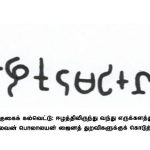
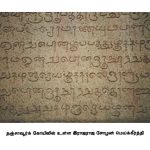
The earliest known inscriptional record containing the name Eelam is the Tamil-Brahmi inscription at Thiruparankundram.
The inscription is engraved on a rock above a row of stone beds in a cave at Thiruparankundram in Tamil Nadu.
It records a donation to Jain ascetics by Polalayan, a householder from Eelam who was living in Erukkalathur.
The inscription is interpreted as:
“A gift to the Jain ascetics by Polalayan, the householder of Eelam residing at Erukkalathur.”
This indicates that Polalayan had migrated from Eelam and settled in Erukkalathur.
His ancestral homeland, Eelam, has been identified with the island.
References: Mahadevan, I. (1966, p. 9; 2003, pp. 390–392); Mahalingam, T. V. (1974, pp. 251–257).
Thiruparankundram cave inscription: A donation to Jain ascetics by Polalayan, a householder from Eelam residing at Erukkalathur. Image credited in the original article to I. Mahadevan (2003, p. 390).
5. The Abhayagiri Rock Inscription at Anurathapuram — Second Century BCE
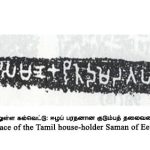
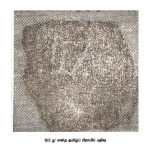
At the Abhayagiri Vihara in Anurathapuram, a Brahmi rock inscription dated to the second century BCE contains three lines.
It is catalogued as Inscriptions of Ceylon, No. 94.
The first line reads:
“Eelabharatahi Dameda-Samane Karate Dameda Gahapatikana Pasade.”
The author translates this as:
“The upper storey of the Tamil householder’s residence was constructed by Saman, an Eelam Bharata.”
The scholar S. Paranavitana, who first published a reading of this inscription, interpreted the first word as Ilubharatahirather than Eelabharatahi.
Professor Veluppillai criticised this reading.
According to Veluppillai, the first Brahmi character, representing the sound Ee, was clearly visible, and Paranavitana had deliberately misread it.
(Paranavitana, S., 1970, Inscription No. 94)
The author also notes that the term Bharata in the island’s Brahmi inscriptions could refer to a leader or lord.
The householder Saman may therefore have belonged to an influential or high-status family.
Abhayagiri inscription at Anurathapuram, interpreted as referring to the upper storey of a residence constructed by Saman of Eela Bharata. Image credited in the original article to S. Paranavitana.
6. Pottery Inscriptions Bearing the Name Eelam
In 1992, archaeological excavations were conducted at Mannithalai in Poonakari by a team from the University of Yaalppaanam under Professor P. Pushparatnam.
Two pottery fragments bearing Tamil-Brahmi inscriptions were discovered.
The inscriptions contained the forms:
“Eezha” and “Eela”
Both fragments were dated to approximately the second century BCE.
According to the author, these discoveries demonstrate that Eelam was already used locally as an alternative name for the island among ordinary people.
Reference: Pushparatnam, P. (1993, p. 39).
7. Eelam in Pattinappalai — First Century CE
During the first century CE, the poet Kadiyalur Uruthirankannanar composed the Sangam literary work Pattinappalai.
The poem praises the Chola king Karikala Valavan and his maritime capital, Kaveripoompattinam.
In describing the goods arriving at the port, the poet refers to food products imported from Eelam and merchandise arriving from Kazhagam, identified here as Kadaram.
The celebrated line reads:
“Eezhaththu Unavum Kazhagaththu Aakkamum.”
English translation: “Food from Eelam and goods from Kazhagam.”
This Sangam verse indicates that food products were exported from Eelam to the Chola kingdom during the reign of Karikala Valavan.
Reference: Pattinappalai (1988, p. 6).
8. Eelaththu Poothanthevanar — First Century CE
The Sangam Tamil literary collections, dated here to approximately 300 BCE–100 CE, contain seven poems attributed to Eelaththu Poothanthevanar.
His poems appear in three major anthologies:
Literary collectionNumber of poemsAkananuru3 — poems 88, 231 and 307Kurunthogai3Natrinai1 — poem 366Total7
The poem in Natrinai describes a sparrow building its nest in bamboo.
The poet is said to have migrated from Eelam and settled in Madurai.
According to Professor Pillay, he participated in the Tamil Sangam at Madurai, composed poetry and presented his works before the assembly.
For this reason, he used the designation Eelaththu Poothanthevanar, meaning Poothanthevanar of Eelam.
References: Pillay, K. (1975, p. 37); Dravidian Encyclopaedia, Vol. 3, p. 767.
9. The King of Eelam: Eelaththu Araiyan
During the tenth-century Battle of Vellur, the Pandyan king fought against the Chola ruler Parantaka I (907–955 CE).
The ruler of Eelam supported the Pandyan king in this conflict.
In inscriptions, this ruler is referred to as Eelaththu Araiyan, meaning the King or Lord of Eelam.
During the 1920s, the epigraphist Krishna Sastri examined inscriptions on the northern wall of the sanctum of the Karapureeswarar Temple at Thirupparkadal in Tamil Nadu.
He recorded that Eelaththu Araiyan had led military forces against the army of Parantaka Chola.
In his scholarly notes, Krishna Sastri identified Eelaththu Araiyan as referring to the ruler of the island.
Reference: Krishna Sastri (1929, Inscription 232).
10. Eela Mandalam in the Inscriptions of Rajaraja Chola
Eelam was among the territories conquered and ruled by the Chola emperor Rajaraja I (985–1016 CE).
Inscriptions associated with Rajaraja Chola have been found at the Shore Temple in Mamallapuram and in a cave at Thirumalai near Polur.
These inscriptions were deciphered by the German epigraphist Eugen Hultzsch and published in 1890 in South Indian Inscriptions, Volume I.
Two of these inscriptions contain the name:
“Eela Mandalam”
Hultzsch identified Eela Mandalam as referring to Ceylon.
Following the Chola conquest in 993 CE, the island became one of the Chola administrative territories.
It was then called:
“Eelamana Mummudi Chola Mandalam.”
This meant Eelam, the province of the Three-Crowned Chola.
Rajaraja’s royal eulogies also celebrate his conquest of Eelam:
“Enthisai Pugazhthara Eela Mandalamum.”
English translation:
“And Eela Mandalam, whose fame spread in all eight directions.”
Reference: Hultzsch, E. (1890, Vol. I).
11. Eelam in Chola-Period Inscriptions
Several Chola inscriptions refer to the island using the name Eelam.
The Karandai charter of Rajendra Chola I contains the expression:
“Murattezhil Singalar Eela Mandalam.”
This refers to the Eela Mandalam associated with the Sinhalese.
The inscriptions of Rajadhiraja I describe him as:
“Maduraiyum Eelamum Kondavan.”
English translation:
“The one who conquered Madurai and Eelam.”
The royal eulogies of Kulothunga Chola III contain the phrase:
“Singalavan Thalaiyaar Then Eelam Kolgavenna Thiraikadalai Adaikkavenna.”
These inscriptions are presented as evidence that the name Eelam was used to refer to the island as a whole rather than exclusively to one region.
12. Eelam in the Mathottam Inscription
An eleventh-century Tamil inscription discovered at Mathottam is preserved on a stone slab in the Colombo Museum.
The inscription is catalogued as No. 1412.
It was examined by the Indian epigraphist Krishna Sastri during the 1920s.
The inscription records a donation made by a landowner from the Chola region of Tamil Nadu to the Thiruketheeswaram Temple in Eelam.
Dr. A. Veluppillai also discussed this inscription.
References: Krishna Sastri (1923, No. 1412); Veluppillai, A. (1972, pp. 42–55).
13. Eelam in Pandyan Inscriptions
Veerapandyan, the younger brother of Jatavarman Sundara Pandyan, ruled between 1253 and 1273 CE.
His royal eulogy refers to his military expedition against Eelam:
“Sonadum Eelamum Kondu, Saavagan Mudiyum Mudithalaiyum Kondaruliya Veerapandya Devarkku…”
English translation:
“To Veerapandya Devar, who conquered the Chola country and Eelam and seized the crown and crowned head of the Javaka ruler…”
Similarly, an inscription of Kongu Veerapandyan records his conquest of Eelam and his victory over a Javaka ruler who had governed there.
The inscription includes:
“Kongeelam Kondu Koduvadugu Kodazhiththu Gangai Irukaraiyum Kaveriyum Kondu.”
The author cites these records as further evidence of the historical use of Eelam.
Reference: Mayuran, A. (2020).
14. Eelam in the Dakshina Kailasa Puranam
The Dakshina Kailasa Puranam records the traditional history of the Thirukoneswaram Temple.
Its title means “The Puranam of the Southern Kailasa.”
The work is said to have been composed by Singai Ariyan, a ruler of the Yaalppaanam kingdom, whose reign is dated to 1388–1410 CE.
The text identifies the land in which the Shiva temple stands as Eelam.
It also contains descriptions of the inhabitants of Eelam.
References: Chidambara Iyer (1887); Raghunatha Iyer (1942); Swami Gnanapragasar (1940).
15. Eelam in the Sethupathi Copper-Plate Charters
The Sethupathi rulers governed the Ramanathapuram and Sivaganga regions of Tamil Nadu between the sixteenth and twentieth centuries.
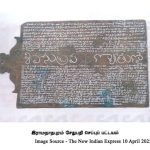
A Sethupathi copper-plate charter, dated in the article to 1607 CE and associated with the reign of Raghunatha Thirumalai Sethupathi (1659–1670), contains the phrase:
“Eelamum Kongum Yaalppaanap Pattanamum.”
English translation:
“Eelam, Kongu and the city of Yaalppaanam.”
The author interprets this wording as indicating that Yaalppaanam was regarded as a distinct geographical region within the wider context of Eelam.
Reference: Sethupathi Copper Plate Inscriptions in Tamil.
16. Eelam in Parālai Vinayagar Pallu
In Tamil literature, Pallu is a minor literary genre in which a story, dramatic performance or event is presented through poetic verses.
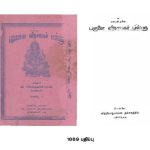
During the eighteenth century, under Dutch colonial rule, the poet Nallur Chinnathambi Pulavar (1716–1780) composed Parālai Vinayagar Pallu.
The work consists of 130 songs praising Parālai Vinayagar of Sulipuram.
The narrative features a Pallar man and his two wives:
- Eela Mandala Palli.
- Chola Mandala Palli.
Through these characters, the poet celebrates the distinctive qualities of Eela Mandalam and Chola Mandalam.
At the end of her songs praising her homeland, Eela Mandala Palli declares:
“Eela Mandala Naadengal Naade.”
English translation:
“The land of Eela Mandalam is our homeland.”
Reference: Parālai Vinayagar Pallu, 1889 edition.
17. Eela Mandala Sathagam
In Tamil literature, a Sathagam is a poetic work consisting of 100 verses devoted to a particular subject.
Eela Mandala Sathagam is a Tamil literary composition celebrating the history and distinguished qualities of Eelam.
The work praises the greatness of Eelam, the significance of Saivism and the distinctive religious traditions and cultural characteristics of Yaalppaanam.
It was composed in 1848 by Mattuvil Ganapathipillai Velpillai, also known as M. G. V. Pillai Pulavar.
18. Eelam in the Tamil National Anthem
On 4 February 1948, the island gained independence from British colonial rule.
The article states that approximately ten years earlier, the Bengali poet Rabindranath Tagore (1861–1941) had anticipated independence for India and the island and composed English national anthems for both countries.
According to this account, Ananda Samarakoon, a distinguished musician and student of Tagore, translated Tagore’s poem into Sinhala and adapted it to music in 1948.
A Tamil translation of the poem was prepared by the Tamil Nadu poet Desika Vinayagam Pillai.
One line reads:
“Eezha Siromani Vaazhvuru Boomani Namo Namo Thaaye.”
English translation:
“O Eelam, precious jewel among lands, blessed land of life, we salute you, Mother.”
The Sinhala and Tamil versions of the national anthem, beginning with Namo Namo Matha, were recognised by the government and performed during the independence celebrations in Colombo.
In 1961, the opening words of the Sinhala national anthem were changed without Ananda Samarakoon’s consent.
The article states that this caused him profound emotional distress and that he died by suicide on 5 April 1962.
References: Hettiarachchi, K. (2001); The Sunday Times (2017).
19. The Concept of Tamil Eelam in the Late Twentieth Century
Following independence from British rule, political developments led to the northern and eastern regions traditionally inhabited by Tamil-speaking people being described as Tamil Eelam.
On 14 May 1976, the Tamil United Liberation Front held its annual convention at Vaddukoddai under the leadership of S. J. V. Chelvanayakam.
At this convention, a resolution was adopted calling for the establishment of an independent Tamil Eelam and the recognition of the Tamil people’s right to self-determination.
The resolution argued that establishing a separate, independent Eelam was the only way to secure the liberation of the Tamil people.
The author concludes that it is historically incorrect to claim that the Liberation Tigers of Tamil Eelam (LTTE) invented either the name Eelam or the political concept of Tamil Eelam.
The name Eelam, as demonstrated by the inscriptions and literary evidence discussed in the article, had existed for more than two thousand years before the emergence of the modern political movement.
References and Bibliography
The following references are reproduced from the original article, with Tamil titles transliterated where appropriate.
1. Burrow, T., and Emeneau, M. B. (1961). A Dravidian Etymological Dictionary. Oxford University Press.
2. David, H. S., Rev. (1970). An Etymological and Comparative Lexicon of the Tamil Language. Yaalppaanam.
3. Xavier, J. T. (1977). The Land of Letters. Skyline Publications, Thirukonamalai.
4. Schalk, Peter (2004). Īlam < Sīhaļa? An Assessment of an Argument. Uppsala University.
5. Mahadevan, I. (1966). Corpus of the Tamil Brahmi Inscriptions. Seminar on Inscriptions, Madras, p. 9.
6. Mahadevan, I. (2003). Early Tamil Epigraphy: From the Earliest Times to the Sixth Century A.D. Harvard University Press, Cambridge, pp. 390–392.
7. Mahalingam, T. V. (1974). Early South Indian Palaeography. University of Madras, pp. 251–257.
8. Paranavitana, S. (1970). Inscriptions of Ceylon, Vol. I. Department of Archaeology, Colombo.
9. Pushparatnam, P. (1993). Poonakari Archaeological Research. University of Yaalppaanam, Thirunelveli.
10. Pattinappalai (1988). Composed by Kadiyalur Uruthirankannanar. Palaniappa Brothers, Chennai.
11. Pillay, K. (1975). “South India and Sri Lanka.” Sir William Meyer Lectures 1958–59. University of Madras, p. 37.
12. “Poothan Thevanar.” Dravidian Encyclopaedia, Vol. 3, p. 767.
13. Krishna Sastri (1929). South Indian Inscriptions, Vol. 3, No. 99, Inscription 232. Archaeological Survey of India.
14. Veluppillai, A. (1972). “Inscription from Tirukkētisvaram of Mātōttam.” Ceylon Tamil Inscriptions, pp. 42–55.
15. Hultzsch, Eugen (1890). South Indian Inscriptions, Vol. I. Government Press, Madras.
- Inscriptions at Mamallapuram, No. 40, p. 63.
- Inscriptions at Tirumalai near Polur, p. 95.
The original article also reproduces the following passage from Hultzsch’s discussion of Rajaraja Chola’s inscriptions:
“This Inscription is dated in the twenty-fifth year of Ko-Rajaraja-Rajakesarivarman, alias Raraja-deva. It states that the king ‘built a jewel-like hall at Kandalur’ and then gives a list of the countries, which he is said to have conquered.”
Hultzsch identifies Eela Mandalam with Ceylon in the subsequent discussion.
16. Krishna Sastri (1923). “No. 1412. On a Slab Preserved in the Museum at Colombo.” South Indian Inscriptions, Vol. 4, p. 173.
17. Veluppillai, A. (1972). “Inscription from Tirukkētisvaram of Mātōttam.” Ceylon Tamil Inscriptions, pp. 42–55.
18. Dakshina Kailasa Puranam. Edited by K. Chidambara Iyer (1887), Chennai.
19. Dakshina Kailasa Puranam. Edited by E. S. Raghunatha Iyer (1942), Yaalppaanam.
20. Fr. Gnanapragasar (1940). A Critical History of Jaffna, pp. 99–102.
21. Mayuran, A. (2020). A Rebuttal to the Sinhala Government’s Denial: Eelam Is an Ancient Name of the Island. Independent article.
22. Parālai Vinayagar Pallu (1889 reprint). Vidyanupalana Press, Chennai.
23. Kumaraswamy Pulavar (1938). Tamil Pulavar Sarithiram. Chennai.
24. Hettiarachchi, Kumudini (4 February 2001). “When Words Killed a Great Man.” The Sunday Times.
25. The Sunday Times (8 May 2017). “Pride and Tragedy.”
About the Author Dr. Siva Thiagarajah
Dr. Siva Thiagarajah is the author of numerous research publications and holds academic qualifications in medicine, genetics, archaeology and history.
He obtained a Bachelor of Science degree from the University of Ceylon and an MBBS degree from its Faculty of Medicine.
He subsequently earned a PhD from the University of London.
He also participated in archaeological workshops conducted at the University of Cambridge by the distinguished archaeologist Professor Colin Renfrew.
Over the past fifty years, Dr. Thiagarajah has authored 26 books.
Some of his research publications are used as reference works at universities in Eelam and southern India.
His well-known English-language books include:
- Peoples and Cultures of Early Sri Lanka
- Genetic Origins of the Tamils
- Genetic Origins of the Sinhalese People
- Kantarodai Civilization of Ancient Jaffna
- Archaeological Excavations at the Jaffna Fort
- Early Siva Temples of Ancient Lanka
- The Tamils of Lanka – A Timeless Heritage
His Tamil publications include:
- Maruthuva Kalanjiyam — Medical Encyclopaedia.
- Eela Thamizharin Aathi Suvadugal — Ancient Traces of the Eelam Tamils.
- Ulagil Periya Hindu Koyil Angkor Wat — Angkor Wat: The World’s Great Hindu Temple.
- Gilgamesh Kaaviyam — The Epic of Gilgamesh.
- Tamil Makkalum Thazhuviya Mathangalum — The Tamil People and the Religions They Adopted.
- Bauthathai Valartha Pandaiya Thamizhar — The Ancient Tamils Who Fostered Buddhism.
Translation by Hari