
Che Guevara — The Man Who Never Bowed His Head, Even in His Final Moments!
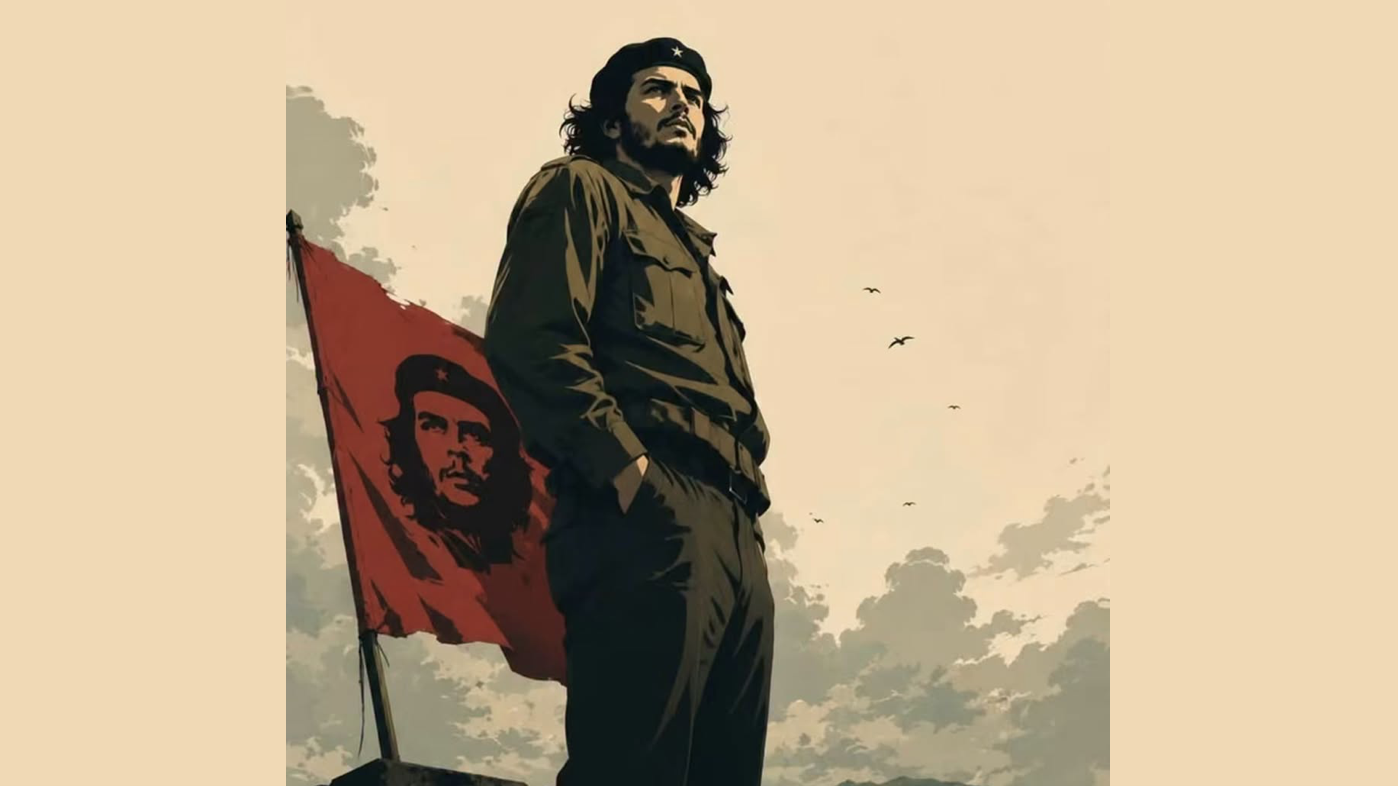
Che Guevara — The Man Who Never Bowed His Head, Even in His Final Moments!
October 8 — The day a revolutionary was captured.
October 9 — The day a man was killed.
But also the day the world learned that an idea cannot be killed!
Gunfire echoed through the forests.
An exhausted body… a stomach weakened by hunger… wounded legs… a rifle in his hands…
One by one, his companions had become separated from him.
There was no food. There were not enough medical supplies. The enemy’s encirclement was tightening.
And yet, there was no sign of defeat in that man’s eyes.
That man was Che Guevara!
A revolutionary who had fought for oppressed people across the world.
But on that day, deep within a small forest in Bolivia, he stood almost alone, caught between life and death.
October 8, 1967 — The Forest Closed In Around Him!
In the Quebrada del Yuro region of Bolivia, Che Guevara and his comrades were surrounded by military forces.
Gunfire erupted.
Shots were fired in return.
During the confrontation, bullets struck Che’s legs. Historical accounts also indicate that his weapon was damaged.
His chances of escape grew smaller and smaller.
Finally, Bolivian soldiers captured him.
A man who had once commanded revolutionary armies now stood as a prisoner in the hands of his enemies.
But his enemies could control only his body.
They could not control his convictions!
He was taken to a small village called La Higuera, where he was imprisoned in an old schoolhouse.
One of the most significant final nights in world history began inside that little school.
That Night — A Man Waiting for Death
It was no luxurious prison.
Crumbling walls. A dirty floor. A room filled with darkness and silence.
There lay Che, his hands bound.
Outside, armed soldiers stood guard.
Inside, a man who had challenged the world was facing death.
What would happen if they kept him alive?
He would speak.
He would explain his struggle.
His words would spread across the world.
If he were brought before a court, the trial might become a political platform.
For this reason, the Bolivian military leadership decided that keeping him alive was too dangerous.
The United States, particularly the CIA, which had been monitoring Che, also played an important role in the operation.
However, the direct order to execute him came from the Bolivian military leadership.
The night dragged on.
Did Che know what awaited him the following day?
We do not know.
But even as death approached, he remained a prisoner without becoming a coward.
October 9, 1967 — That Fateful Morning
That morning, CIA operative Félix Rodríguez met and questioned Che.
His personal belongings were confiscated.
Photographs were taken.
The man whom the world would one day remember as a revolutionary was, at that moment, a prisoner inside a room in an old schoolhouse.
Within a few hours, his life would come to an end.
The decision to kill him had been made.
A Bolivian soldier named Mario Terán was selected to carry out the execution.
The order of death had arrived.
Only minutes remained.
“Shoot! You Are Only Killing a Man!”
Mario Terán entered the room where Che was being held.
He may have expected to find a prisoner trembling with fear.
But the man before him had not lost his self-respect.
There are several accounts of Che’s final words.
One of the most widely quoted versions is:
“Shoot, coward! Remember, you are only killing a man!”
It cannot be established with certainty whether these were his exact words.
But history records that Che faced his death in those final moments.
Then the gunfire rang out.
One bullet.
Another.
Death entered the room.
On October 9, 1967, Che Guevara was shot and killed in La Higuera, Bolivia.
He was 39 years old.
A man’s heart stopped beating.
But those bullets could not stop one other thing.
His name!
They had killed a man…
Not an idea!
They Killed a Man, Not an Idea
Che Guevara was not a flawless saint.
He believed in armed revolution, and his actions and political decisions remain subjects of intense debate to this day.
Yet the questions he raised about poverty, inequality and imperialism continued to inspire reflection among people in many parts of the world.
While he was alive, they hunted him.
When they captured him, they imprisoned him.
They killed him to silence his voice.
But time carried his face across the world.
His photograph appeared on posters.
His life was written about in books.
His face was printed on the shirts of young people.
His name echoed in the slogans of protest movements.
Was this one of history’s great ironies?
Those who wanted the world to forget a man ended up making his death something the world would remember.
We can debate whether the path he chose was right or wrong.
We can accept or reject his politics.
But can destroying a person’s body also destroy every question that person raised?
That is the question Che Guevara’s death left behind.
A Death That History Could Not Erase
On October 9, a revolutionary lost his life on Bolivian soil.
That day, a mother lost her son.
Some comrades lost their leader.
A family lost someone they loved.
But to millions of people around the world, he became a lasting memory.
Death may bring a person’s journey to an end.
But it cannot provide answers to the questions that person raised.
Che Guevara…
The world is still debating you.
Even those who do not agree with the path you chose remember your death.
Because…
They took your life.
But they could not erase your name from history!
— October 9: Che Guevara Remembrance Day
Translation by Hari
0 Comments