
Aippasi Sathayam — From Arunmozhivarman to Sivapadasekaran
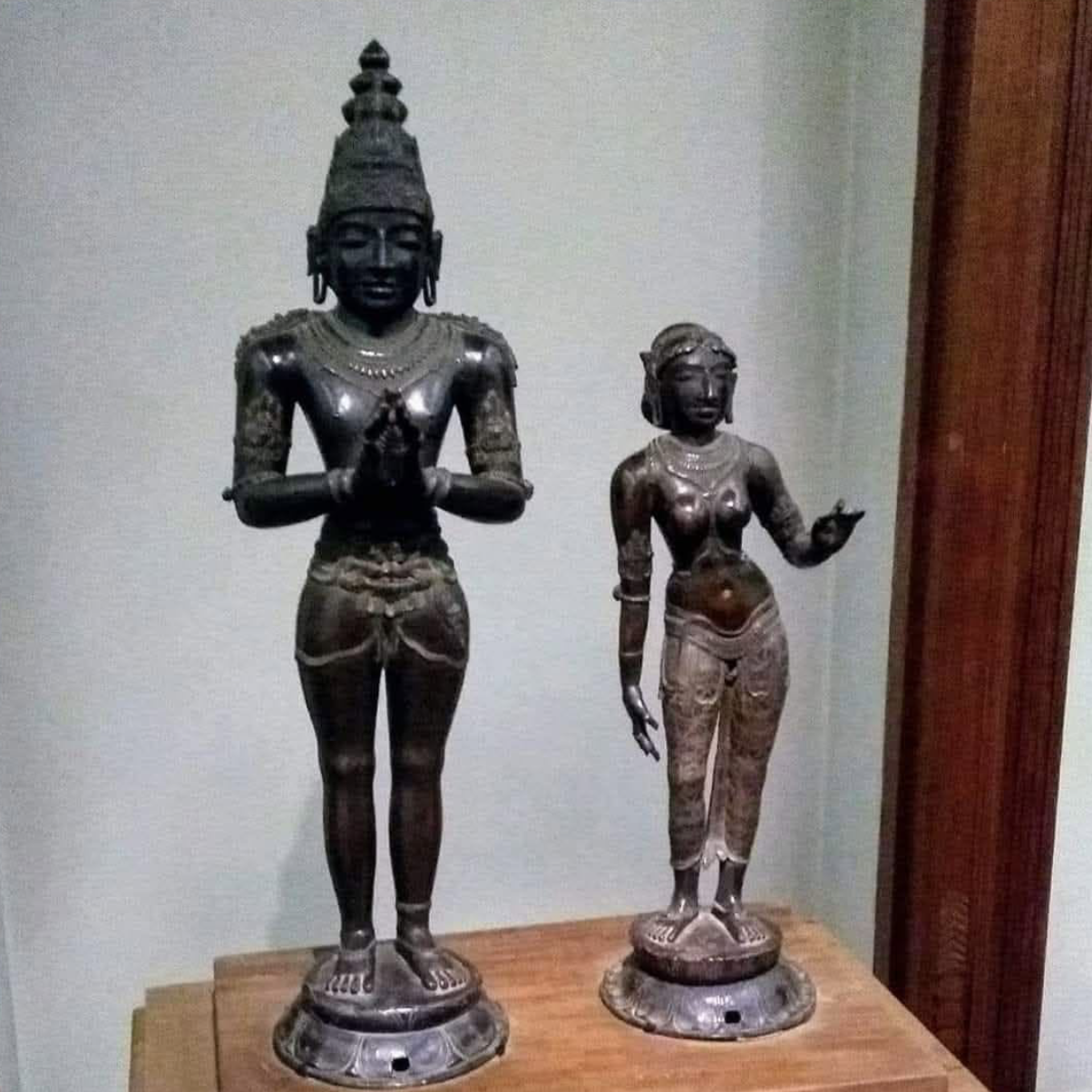
Aippasi Sathayam — From Arunmozhivarman to Sivapadasekaran
Celebrating the Birth Anniversary of the Great Chola Emperor Rajaraja I The growth and greatness of the Chola Empire were made possible by the extraordinary abilities of the kings who emerged from the Chola dynasty.
Among these powerful rulers, it would not be an exaggeration to describe Rajaraja Chola I as one of the greatest. Today, his birth anniversary is celebrated on Aippasi Sathayam, the day associated with his birth according to the Tamil calendar.
The great emperor who became known to history as Rajaraja was originally named Arunmozhivarman. This name is recorded in the Thiruvalangadu copper-plate inscriptions. After ascending the throne, he acquired numerous royal titles and honorific names.
Many of these titles were subsequently used to name administrative divisions known as Valanadus, as well as larger territories called Mandalams.
The Valanadu administrative system, somewhat comparable to the modern taluk system, was established during Rajaraja’s reign.
In this article, we will explore the emperor’s various titles and the meanings behind them.
- Rajarajan — King of Kings
The name Rajarajan appears in an inscription dating to the third year of his reign.
It means:
“The King of All Kings.” This title reflects his supreme authority and position among contemporary rulers.
- Keralantakan — The Destroyer of Kerala’s King
Rajaraja received the title Keralantakan following one of his greatest military victories, the conquest associated with Kandalur Salai.
The name means:
“One who is like Yama, the God of Death, to the King of Kerala.”
To commemorate his first major military victory, the first gateway tower of the great temple at Thanjavur was named Keralantakan Vayil — the Gateway of Keralantakan.
- Rajasiriyan — The Conqueror of Satyashraya
Rajaraja acquired the title Rajasiriyan after defeating the Western Chalukya king Satyashraya in battle.
An inscription at the Thanjavur temple records that a ceremonial pavilion within the Thanjavur palace was named Rajasiriyan in honour of this victory.
- Jananathan — Leader of the People
Another title bestowed upon Rajaraja was Jananathan, meaning:
“Leader of the People.”
During Rajaraja’s reign, Eelam was conquered by the Cholas. The city of Polonnaruwa in Eelam was renamed Jananathamangalam and established as the Chola administrative capital on the island.
- Jayankonda Cholan — The Ever-Victorious Chola
The title Jayankonda Cholan means:
“The Chola who achieved victory everywhere.” It celebrates Rajaraja as a victorious warrior who never experienced defeat.
- Pandiyakulasani — The Thunderbolt of the Pandyan Dynasty
After defeating the Pandyans and conquering Pandya Mandalam, Rajaraja received the title Pandiyakulasani.
The name means: “The thunderbolt that struck the Pandyan dynasty.”
An inscription at the Brihadisvara Temple in Thanjavur records that Thanjavur was situated within an administrative division called Pandiyakulasani Valanadu during Rajaraja’s reign.
- Mummudi Cholan — The Three-Crowned Chola
The inscriptions of the great temple at Thanjavur record Rajaraja’s victories over the Pandyans and Cheras. Because he claimed the crowns of all three great Tamil dynasties — the Cholas, Cheras and Pandyas — he became known as:
Mummudi Cholan — The Three-Crowned Chola Emperor.
This title symbolised his supremacy over the traditional three crowned kingdoms of Tamilakam.
- Ranamukha Bhiman — Bhima on the Battlefield
Rajaraja received the title Ranamukha Bhiman because he possessed the strength and ability to defeat his enemies in battle, like the legendary warrior Bhima of the Mahabharata.
The title means:
“One who is like Bhima on the battlefield.”
- Satrubujangan — The Conqueror of Enemies
The title Satrubujangan signifies:
“One whose mighty arms have defeated his enemies.”
It celebrates Rajaraja’s military strength and victories.
- Chandaparakraman — The Fierce and Powerful Warrior
The title Chandaparakraman describes a ruler possessing extraordinary strength and fierce determination.
Its meaning is:
“One who possesses tremendous power and fury, like Yama, in overpowering his enemies.”
- Rajavidhyadharan — Master of Music
Rajaraja was also known as Rajavidhyadharan.
This title means:
“One who excels in the art of music.”
It reflects his accomplishments and appreciation of musical traditions.
- Kshatriya Sikhamani — The Crown Jewel of the Royal Lineage
The title Kshatriya Sikhamani means:
“The crown jewel of the royal warrior lineage.”
It presents Rajaraja as the finest representative of the Kshatriya ruling tradition.
- Rajamarthandan — The Sun Among Kings
The title Rajamarthandan means:
“The Sun among kings.”
Just as the sun shines above the world, Rajaraja was regarded as a ruler whose greatness surpassed that of other kings.
- Aridurgalangan — Destroyer of Enemy Fortresses
The title Aridurgalangan means:
“One who excels in destroying the fortresses of his enemies.”
It commemorates his ability to overcome fortified enemy positions during military campaigns.
- Murtha Vikramabharanan — Adorned with Victory
The title Murtha Vikramabharanan means:
“One whose very appearance is adorned with victory.”
It portrays military success as the emperor’s finest ornament.
- Panditha Cholan — The Learned Chola
Rajaraja received the title Panditha Cholan in recognition of his education, intellectual accomplishments and appreciation of the arts.
The name means:
“The Scholarly Chola.”
- Uttama Cholan — The Noble Chola
The title Uttama Cholan reflects the king’s admirable personal qualities.
It describes him as:
“A good, virtuous and exemplary ruler, free from shortcomings.”
- Abhayakulasekaran — Protector of Those Seeking Refuge
The title Abhayakulasekaran signifies Rajaraja’s willingness to offer protection and support to those who sought his help.
Its meaning is:
“The noble protector who grants refuge and security to those who approach him.”
- Raja Sarvagnan — The All-Knowing King
The title Raja Sarvagnan means:
“The king who possesses complete knowledge and supreme wisdom.”
It portrays Rajaraja as a ruler of exceptional intelligence and understanding.
- Periya Perumal — The Great and Revered Sovereign
Because Rajaraja was regarded as a magnificent and highly respected emperor, he was also known as Periya Perumal.
The title means:
“The Great Lord” or “The Great and Revered Sovereign.”
An inscription at the Thanjavur temple describing a statue erected in Rajaraja’s honour refers to him as Periya Perumal.
- Singalantakan — The Destroyer of the Sinhala King
Following his conquest of Eelam, Rajaraja received the title Singalantakan.
The name means:
“One who is like Yama, the God of Death, to the Sinhala king.”
It commemorates his military victory in Eelam.
- Ravikula Manikkam and Ravivamsa Sikhamani — The Jewel of the Solar Dynasty
The Chola dynasty traditionally claimed descent from the Solar lineage.
Rajaraja was regarded as the precious jewel and crowning glory of this royal ancestry.
This is reflected in two titles:
Ravikula Manikkam — The Precious Jewel of the Solar Dynasty.
Ravivamsa Sikhamani — The Crown Jewel of the Solar Lineage.
Both titles celebrate his exceptional position within the Chola royal tradition.
- Cholendra Simman and Nigarili Cholan — The Unrivalled Chola Emperor
Two further titles express Rajaraja’s supremacy:
Cholendra Simman — A ruler comparable to Indra among the Cholas.
Nigarili Cholan — The Chola Emperor Without Equal.
These titles describe him as an incomparable sovereign, unmatched by other rulers.
- Azhagiya Cholan and Cholakula Sundaran — The Handsome Chola
Rajaraja’s majestic physical appearance was celebrated through the titles:
Azhagiya Cholan — The Beautiful or Handsome Chola.
Cholakula Sundaran — The Handsome One of the Chola Dynasty.
These honorific names refer to his distinguished and impressive appearance.
- Rajavinothan and Nithya Vinothan — Patron of the Arts
The titles Rajavinothan and Nithya Vinothan reflect Rajaraja’s deep interest in the arts.
They highlight his appreciation of artistic expression, creativity and cultural activities.
- Sivapadasekaran — One Who Bears the Feet of Shiva Upon His Crown
Among Rajaraja’s many titles, Sivapadasekaran holds particular religious significance.
It expresses his profound devotion to Lord Shiva.
The title may be understood as:
“One who bears the sacred feet of Lord Shiva upon his crown.”
It reflects Rajaraja’s deep commitment to Saivism and his reverence for Shiva.
The Immortal Legacy of Rajaraja Chola
Each of the titles discussed above highlights a different aspect of Rajaraja’s greatness.
Some commemorate his military victories.
Others celebrate his scholarship, wisdom, artistic interests, personal virtues, royal authority and religious devotion.
According to the author, these titles are not merely expressions of praise.
The inscriptions and copper-plate charters produced during Rajaraja’s own lifetime remain as historical witnesses to his achievements.
They continue to preserve the memory of one of the greatest emperors of the Chola dynasty.
As long as the Sun and Moon endure, the name and glory of the great Emperor Rajaraja Chola shall remain upon this Earth.
Translation by Hari
0 Comments