
Tolkappiyam: A Literary Heritage Given by Eelam
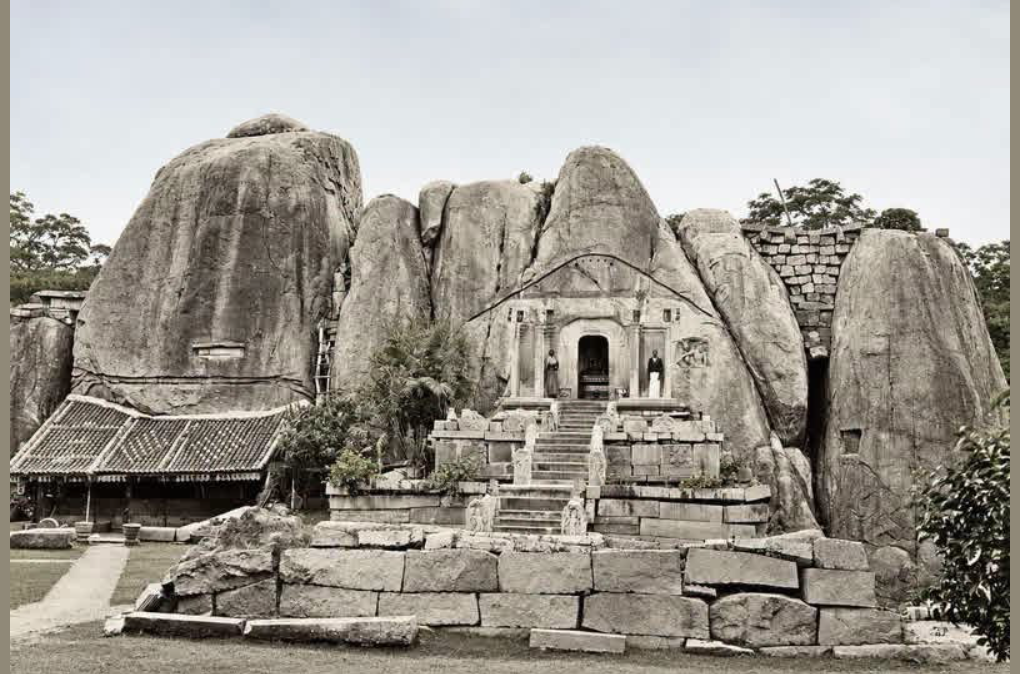
Tolkappiyam: A Literary Heritage Given by Eelam
The following verse indicates that the Chera and Chola dynasties originated from the Pandyan lineage, which was the earliest royal dynasty to emerge in ancient Tamilakam.
“Thalaiyavai Kaalaththu Thalaivar Immurai
Maran Valuthi Maran Thiraiyan
Maran Poraiyan Or Vaguppil Vanthanar
Tamil Moovar Asivar Thaamaavaare.”
— Narkudi Velalar Varalaru, Prefatory Verse
According to this verse, the three Tamil royal dynasties originated from a common ancestral lineage. Those descended from the Maran Thiraiyan lineage became the Cholas. The descendants of the Maran and Valuthi lineages continued to rule as Pandyans.
One ruler belonging to this Valuthi lineage was the Pandyan king Uthiran, who ruled Eelam during the sixth century BCE. His son was the Pandyan king Nedunchezhiyan, identified in the Mangulam inscription as Kadalan Valuthi. He was not a fictional character from an epic or mythology, but a historical ruler whose existence is supported, according to this interpretation, by inscriptions and numismatic evidence. His royal capital was located in the region of present-day Anurathapuram and Ritigala. This period is placed before the fourth century BCE.
- The Antiquity of the Pandyan Dynasty
Similarly, the Tamil literary work Pathitrupathu provides detailed accounts of eight Chera kings, including the lengths of their reigns. The scholar K. Subramania Pillai systematically calculated these reigns as beginning in the fourth century BCE. The Pandyan royal dynasty discussed here existed in ancient Tamilakam before the rise of these Chera rulers. In 1920, a work entitled Narkudi Velalar Varalaru was printed and published in Madurai. This text, consisting of 1,035 verses, describes the genealogy of the Pandyan dynasty and records 201 generations of Pandyan rulers. The Pandyans maintained a tradition of conferring royal titles upon the rightful successor in each generation, regardless of whether the family actually exercised political power at the time.
Among the five divisions of the Pandyan lineage, including those classified as Kodi and Pithir, the descendants of the Irungovel branch continued the practice of hereditary royal succession. According to this text, Potriyadiya Irungovel, who died in 1944 CE, held the hereditary title of the 201st ruler in the Pandyan royal lineage. The reigns of the Pandyans whose names are recorded in this work are dated according to the Kali Yuga chronological system. Just as the Rajatarangini records the history of Kashmir, Narkudi Velalar Varalaru preserves the long genealogical history of the Pandyan dynasty. It therefore provides some assistance in reconstructing the ancient history of the three Tamil royal dynasties. The work identifies Aryappadai Kadantha Nedunchezhiyan as the 87th Pandyan ruler and Vetrivel Chezhiyan as the 88th. According to the author, these identifications correspond closely with the chronological history of the Chera and Chola dynasties. By incorporating the names of Pandyan rulers omitted from the text but preserved in other historical sources, it becomes possible to reconstruct approximately one thousand years of Pandyan generations, extending from 500 BCE to 500 CE.
- Forty Generations Across One Thousand Years
Forty generations are identified within this thousand-year period. An average of 25 years per generation is considered a reasonable chronological estimate. Among these rulers, only 20 Pandyan names are preserved in the literary works of the Later Sangam period.The remaining names have been supplemented using other historical sources.
Two rulers known from Later Sangam literature are:
- Mudukudumi Peruvaluthi, identified as the 66th Pandyan ruler.
- Karungai Olvaal Perumpeyar Valuthi, identified as the 67th Pandyan ruler.
According to Narkudi Velalar Varalaru, the 70th Pandyan ruler, Deva Pandyan, ruled between approximately 350 and 300 BCE. This was the period during which the Chera rulers Imayavaramban and Palyanai Selkezhu Kuttuvan are said to have lived. The Irungovel lineage, a branch of the Pandyan dynasty, is traced back to Koon Pandyan in 2283 BCE.
- King Udayanan and the Rise of the Gupta Dynasty
The Tamil king Udayanan, who ruled northern India with Kosambi as his capital, is said to have defeated the Aryans in battle in 701 BCE, corresponding to Kali Year 2400. The author argues that if his rule had continued, he might have prevented the rise of the Gupta dynasty in 199 CE. According to this interpretation, the rise of the Gupta rulers was responsible for the first introduction of Mahayana Buddhism into ancient Tamilakam, particularly at Kanchi and Nagarkovil. The Tamil Buddhist epic Manimekalai is presented as a literary work that emerged as a consequence of these developments.
Following this period, the Tamil Buddhist scholars Buddhaghosa and Buddhadatta, who are associated here with the Pandyan kingdom of Thirunelveli, are said to have spread Mahayana Buddhism into Eelam.
As a result, King Mahasena allegedly destroyed the existing Ajivika rock shelters and religious establishments and converted them into Mahayana Buddhist monasteries. The author further attributes Buddhist canonical and commentarial works, including the Vinayavinicchaya, to Buddhaghosa. According to this argument, there had previously been no Buddhist monks in Eelam possessing the scholarly ability to compose such works. Before these developments, Ajivika was supposedly the principal religion of Eelam, which formed part of ancient Tamilakam. Its places of worship were subsequently incorporated into Mahayana Buddhism.
Later, Buddhist literary works and chronicles were composed to provide mythological and epic narratives for these Mahayana religious establishments. The author argues that these narratives attributed the emergence of Buddhism in ancient Tamilakam to the Mauryan emperor Ashoka, rather than to developments under the Gupta dynasty. They also allegedly reidentified Tamil Buddhist scholars such as Buddhaghosa and Buddhadatta as people originating from Kalinga in northern India.
- A Verse Concerning the Gupta Dynasty
The following verse is cited in relation to Gupta rule:
“Pandai Naalaru Noor Aandin Aagarirai Paadalikka Nalavil Padai Vindiruntha Vadavar Padai Thadutha Tamil Venthar Muppaththu Munnootru Mer Kondu Kuththarai Adakkidaathathenai Koodunindra Vadavor Vazhi Thondaraaya Thiran Pinnar Saangkaradi Thoththinaar.”
— Narkudi Velalar Varalaru, Verse 414
The author refers to this verse in discussing the relationship between the ancient Tamil rulers and the political expansion of northern Indian dynasties. These historical arguments are also discussed by Dr. R. Mathivanan in his work Kadaikkazhaga Noolgalin Kaalamum Karuthum (The Period and Ideas of the Later Sangam Texts).
- The Ancient Pandyan Kings: Sons of Kumari
The following chronology identifies several early Pandyan rulers as descendants of Kumari.
| Period | Pandyan ruler | Position in the dynasty |
| 2082 BCE | Mudathirumaran | 6th Pandyan |
| 1932 BCE | Maran Valuthi | 10th Pandyan |
| 1002–960 BCE | Thiruvaluthi | 45th Pandyan |
| 910–854 BCE | Veera Pandyan | 49th Pandyan |
| 884–832 BCE | Pandeesan, also known as Nilantharu Thiruvin Pandyan | 50th Pandyan |
- Tolkappiyam and the Ancient Land of Kumari
Let us now examine the historical references relating to Tolkappiyam.
The Tamil epic Silappathikaram states:
“Pahruli Aatrudan Panmalai Adukkaththu Kumarikkodum Kodum Kadal Kolla Vadathisai Gangaiyum Imayamum Kondu Then Thisai Aanda Thennavan Vaazhi.”
— Silappathikaram
English translation:
“When the fierce ocean swallowed the Pahruli River, the ranges of many mountains, and the lands of Kumari, long live the southern king who took possession of the Ganges and the Himalayas in the north and ruled the southern lands.”
These lines describe a great sea inundation that occurred during the Middle Sangam period. According to the literary tradition, this catastrophe destroyed Kapatapuram, the capital associated with the Middle Sangam.
The Pandyan ruler Nilantharu Thiruvin Pandyan, identified as the 50th Pandyan king and dated to 884–832 BCE, is said to have conquered territories extending to the Ganges and the Himalayas in order to protect and resettle the people displaced by the destruction of their homeland.
Ilango Adigal praises the military achievements of this Pandyan king.
According to the author’s interpretation, during this period the Pandyans were the only major royal dynasty ruling Bharata Kanda, the ancient Tamil land extending from the Himalayas to Eelam. Other rulers were regional Velir chieftains who governed as subordinate authorities under the Pandyan kings.
- Ajivika and the Language of Ancient Tamilakam
Because of the political influence of the Pandyan rulers, Prakrit became prominent as the language associated with the Ajivika religious tradition of ancient Tamilakam.
Ajivika is described here as a collective designation for the ancient Tamil philosophical systems of Enniyam and Sankhya, which had existed long before this period.
These philosophical traditions were collectively referred to by the term Samanam.
The Pandyan king Nilantharu Thiruvin Pandyan, who ruled this ancient Tamil region, is said to have governed from a territory situated south of the Pahruli River.
The Silappathikaram commentator Adiyarkkunallar explains that the Pahruli River formed the northern boundary of the southern portion of the Pandyan kingdom.
His commentary states:
“Akkaalaththu Avar Naattu Thenpaali Mugaththukku Vada Ellaiyaagiya Pahruli Enum Aatrukkum.”
English translation:
“The Pahruli River, which formed the northern boundary of the southern region of his country at that time.”
This is interpreted as evidence that land existed to the south of the Pahruli River.
According to the author, the Pandyan king described by Ilango Adigal as the southern ruler, Nilantharu Thiruvin Pandyan, therefore did not belong to the geographical territory of present-day Tamil Nadu.
Instead, he was a Pandyan ruler of Eelam, the land in which the earliest rulers of ancient Tamilakam are claimed to have originated. The reference to the Pahruli River as a northern boundary is presented as confirmation that additional land existed farther south.This is connected with the descriptions in Sangam literature referring to the lands south of Kumari.
- Tolkappiyam Was Presented During the Reign of Nilantharu Thiruvin Pandyan
Nilantharu Thiruvin Pandyan belonged to the Middle Sangam period.
The prefatory verses of Tolkappiyam indicate that the work was presented before the royal assembly during his reign. On this basis, Professor R. Mathivanan concluded that Tolkappiyam was formally presented in 865 BCE.
The Tolkappiyam Payiram states:
“Nilantharu Thiruvin Pandiyan Avaiyaththu
Arangarai Naavin Naanmarai Mutriya
Athangkottu Aasaan Karilthapath Therinthu
Mayangaa Marabin Ezhuththumurai Kaatti.”
— Tolkappiyam Payiram, Lines 9–12
English translation:
“In the royal assembly of Nilantharu Thiruvin Pandyan, before Athangkottu Aasaan, the learned master who had mastered the four sacred traditions and spoke with the authority of righteousness, the established system of letters was clearly explained according to an unconfused tradition.”
Thus, Tolkappiyar completed and presented his grammatical work before the Pandyan royal assembly. The commentator Nachinarkkiniyar provides a detailed explanation of the term Naanmarai, meaning the four sacred traditions, appearing in this verse.
It is therefore reasonable, according to this interpretation, to conclude that Tolkappiyam was formally presented in the court of a Pandyan king. The commentary on Iraiyanar Kalaviyal also identifies Tolkappiyam as a work belonging to the Middle Sangam, which was situated at Kapatapuram.
- Palyagasalai Mudukudumi Peruvaluthi
Let us now examine the Pandyan ruler Palyagasalai Mudukudumi Peruvaluthi.
The name Mudukudumi, as well as the name of the poet Nettimaiyar, who composed verses in his honour, may be considered indications of considerable antiquity.
Five poems in the Purananuru are attributed to poets who praised this ruler.
They are:
- Karikizhar — Poem 6
- Nettimaiyar — Poems 9, 12 and 15
- Nedumpalliyathanar — Poem 64
The names of all three poets are considered suggestive of an ancient literary period.
In his poem, Karikizhar describes the territorial extent of the Pandyan king’s rule as reaching from the Himalayas in the north to lands beyond Kumari in the south.
The verse states:
“Vadaathu Panipadu Neduvarai Vadakkum
Thenaathu Urukezhu Kumariyin Therkum.”
— Purananuru, Poem 6, Lines 1–2
English translation:
“To the north, beyond the great snow-covered mountains; to the south, beyond the awe-inspiring land of Kumari.”
The poet also praises the ruler’s distinguished appearance and widespread fame.
According to the author’s interpretation, these verses demonstrate that the land associated with the Pahruli River was known as Kumari. They also indicate that the Pandyan rulers governed territories stretching from the lands south of Kumari to the snow-covered Himalayas in the north.
- Eelam as the Ancient Land of Kumari
An earlier Pandyan ruler, Mudathirumaran, is said to have ruled Kumari Nadu, identified here with Eelam, in 2082 BCE.
He is listed as the sixth ruler of the Pandyan dynasty.
His descendants continued to rule this region for 50 generations, culminating in Nilantharu Thiruvin Pandyan.
According to this interpretation, the territory ruled by these 50 generations of Pandyan kings was Kumari Nadu, identified as Eelam.
The author maintains that Eelam continued to be a Tamil land until the fifth century CE.
Before that period, the author argues, no language other than Tamil had emerged in Eelam.
This is presented as further historical evidence supporting the claim that Eelam was the original homeland of the ancient Pandyan kings and the literary civilisation that produced Tolkappiyam.
Translation by Hari
0 Comments