
Inscriptions Referring to the Pandyan King Nedunchezhiyan
Inscriptions Referring to the Pandyan King Nedunchezhiyan
- The Mangulam Inscription
“Kani Nanda Asiriyii Kuvanke Dhammam Itta Nedunchezhiyan Panan Kadalan Valuthiy Kottupitta Pali”
This inscription reveals that the Pandyan king Nedunchezhiyan was also honoured with the distinguished names and titles Panan, Kadalan and Valuthi.
- Inscription IC 266 – Ritigala
“Parumaka Kadali Puta Parumaka Pusamitta Jita Upasika Sumanaya Lene.”
- Inscription IC 269 – Ritigala
The Ritigala inscription states:
“Mahamata Pamatatta Puta Parumaka Patige Parumaka Pusagutta Parumaka Mitte, Parumaka Tise Karite Arita Mahagame.”
- Inscription IC 264 – Ritigala
“Parumaka Reta Puta Parumaka Kadaliya Lene.”
- Inscription Referring to Mahasamutta
“Mahasamutta Puta Guttasa Lene.”
“Parumaka Pamatatta Guttaka Puta Mahaguttaka Lene.”
- Inscription Referring to Kadali’s Son
“Parumaka Kadali Puta Sudanagaha Lene.”
- Inscription Referring to King Uthi and Abhaya
“Gamani Puta Raja Uthi, Raja Uthi Puta Aya Abhaya Sa Jita Abhi Anurathiya.”
- Inscription Referring to Devanapiya Gamani Abhaya
“Devanapiya Maharaja Gamani Abhayasa Puta Tissa Ayaha Lene.”
- Inscription Referring to Majima Raja
“Gamani Tissaha Pitaha Cha Majima Raja Cha Niyate Gamani Tissaha, Giritissagame, Karajinitissagame, Vilugame, Kasapanagare, Malugame Nokapike Sagasa.”
- Inscription Referring to the Reign of Gamani Abhaya
“Dhamarakita Theraha Lene, Agata Anagata Chatudisa Sagasa Dine, Gamani Abhayasa Rajayapi Karite.”
- Inscription Referring to Devanapiya Gamani Abhaya and His Son Tissa
“Agata Anagata Chatudisa Sagasa Dine, Devanapiya Gamani Abhaya Niyate Chata Karaka Cha Ta Rajakiya Nagaraka Cha Parumaka Abhaya Puta Parumaka Tise Niyatapite Rajaha, Agata Anagata Chatudisa Sagasa.”
- The Family Lineage of the Pandyan King Nedunchezhiyan
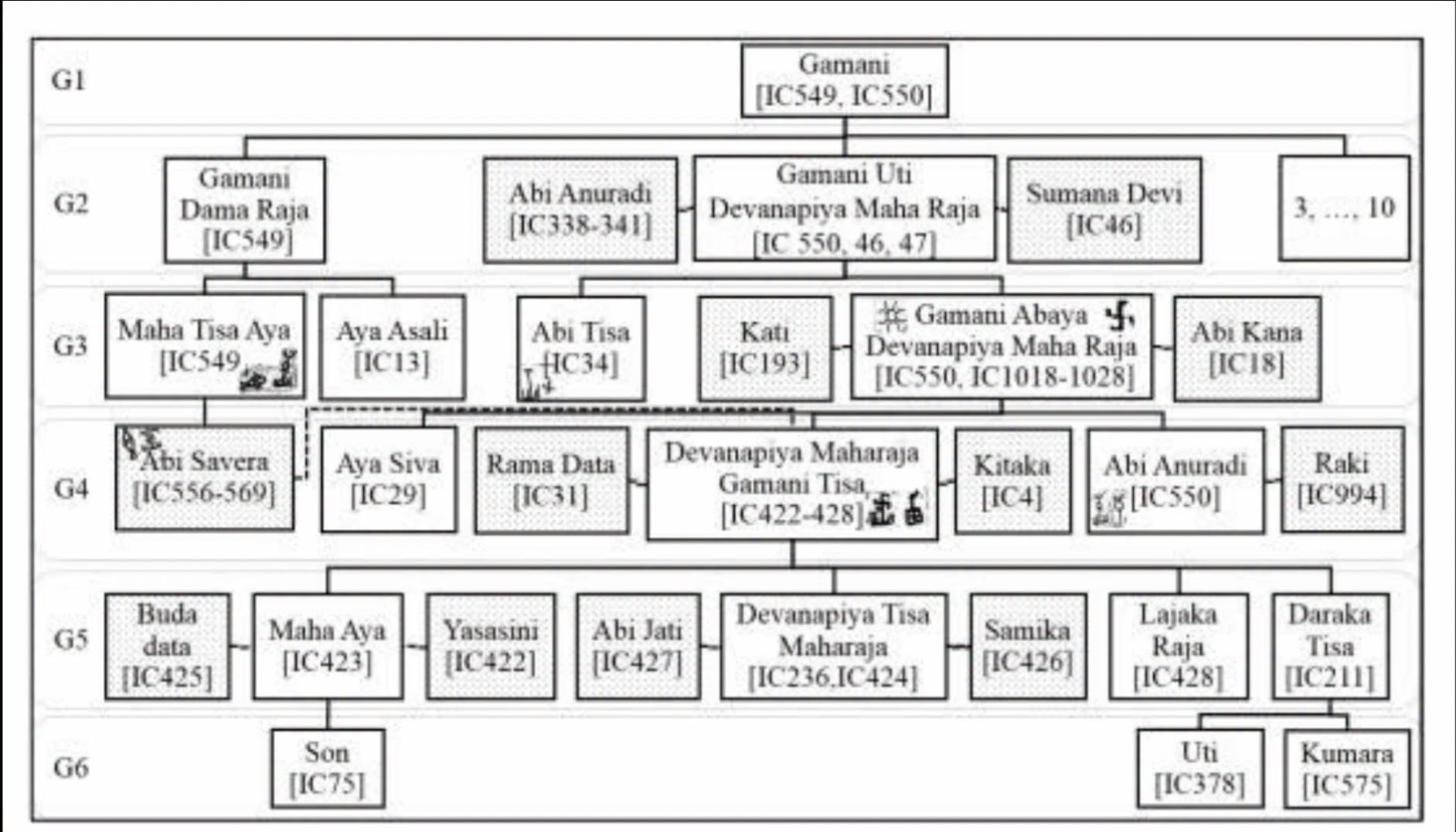
The family genealogy of Gamani Abhaya, also known as Kadali (Kadalan), Pandyan Nedunchezhiyan and Valuthi, is presented below.
Inscription Referring to Naga Abhaya and His Son Uthi
“Parumaka Naga (Abhaya) Puta Retaha (Uthi) Lene.”
This inscription states that Maha Reta, identified as Gamani Uthi, was the son of Naga Abhaya.
Inscription IC 260
“Parumaka (Maha) Reta (Gamani Uthi) Ha Jaya Parumaka Naguli (Abhi Anurathi) Jita Parumakala Tisaya (Abhi Tisaya) Lene.”
The coin bearing the name Uthiran is attributed to this Gamani Uthi.
Inscription IC 261
“Parumaka Maha Reta (Gamani Uthi) Sa Puta Parumaka Nagaha Sa Lene.”
This inscription refers to the brother of Nedunchezhiyan.
Inscription IC 264
“Parumaka Reta (Gamani Uthi) Puta Parumaka Kadaliya (Kadalan / Nedunchezhiyan / Mahasamutta) Lene.”
According to this interpretation, the inscription identifies Kadali, also known as Kadalan, Nedunchezhiyan and Mahasamutta, as the son of Gamani Uthi.
Inscription IC 266 – Ritigala
“Parumaka Kadali (Gamani Abhaya) Puta Parumaka Sudanaga (Gamani Tissa) Ha Parumaka Pusamitta (Kadalan’s son Mitta / brother of Gamani Tissa) Jita (daughter) Parumaka Sumaya Ha Lene.”
This inscription is interpreted as referring to several members of the same royal family.
Kadali is identified as Gamani Abhaya.
His son Sudanaga is identified as Gamani Tissa.
Pusamitta is identified as another son of Kadalan and therefore a brother of Gamani Tissa.
The inscription also refers to Sumaya, the daughter of Pusamitta.
Another inscription states:
“Parumaka Sudanaga (Gamani Tissa) Lene Sagasa.”
Inscription IC 374 – Vedukkunaari Malai
“Pata Sudi Tissaha Lene.”
Translation: The cave or rock shelter of the teacher Sudi Tissa.
Inscription IC 375 – Vedukkunaari Malai
“Parumaka Pusamitta Puta Maha Lene.”
Translation: The large rock shelter belonging to the son of Pusamitta, who was himself a son of Nedunchezhiyan.
Inscription IC 373 – Vedukkunaari Malai
“Mahasamutta Puta Gutta Sa Lene, Sagasa.”
“Parumaka Pamatatta Guttaha Mahaguttaha (Pandyan Nedunchezhiyan / Valuthi) Lene.”
According to the author’s interpretation, this inscription provides further evidence connecting Mahasamutta, Guttaha and Mahaguttaha with the family lineage of the Pandyan king Nedunchezhiyan, also known as Valuthi.
Genealogical Relationships Proposed in the Inscriptions
The author’s proposed identification of the principal rulers can be summarised as follows:
PROPOSED PANDYAN ROYAL LINEAGE
Naga Abhaya
Gamani Uthi
Maha Reta / Reta / Uthiran
Gamani Abhaya
Kadali / Kadalan / Nedunchezhiyan / Valuthi / Mahasamutta
Gamani Tissa
Sudanaga / Sudi Tissa
Pusamitta
Mitta
The inscriptions are thus presented as evidence connecting the Pandyan king Nedunchezhiyan with the rulers and royal family members referred to by different names in the ancient inscriptions of Eelam.
Translation by Hari
0 Comments