
The Dance Traditions of Yaalppaanam
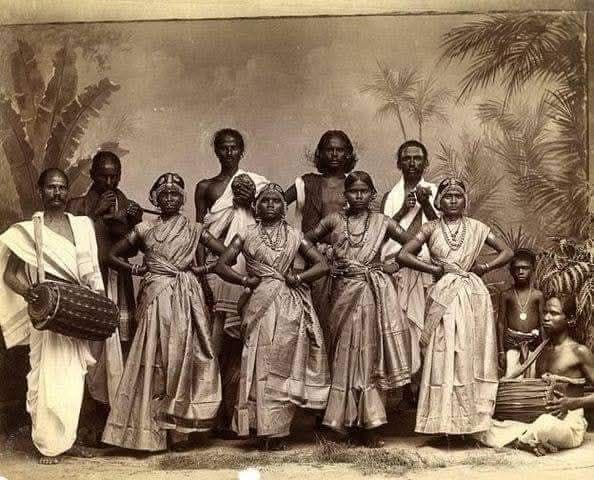
The Dance Traditions of Yaalppaanam
In the temples of Yaalppaanam, female dancers who performed a traditional dance known as Sathirattam (Sadir dance) later came to be known as Chinna Melam performers.
By the early 1970s, public interest in this traditional art form had already begun to decline.
It is said that an entire literary work was written about the female dancers of Yaalppaanam.
This work was called Kanaki Puranam.
It is believed to be a satirical literary composition dating from the eighteenth century.
The following is an extract from an article discussing the literary and cultural history of Chinna Melam.
- Temple Festivals and the Entertainment Culture of Yaalppaanam
“A festival at Kaithady,
A festival at Veraikkai,
A festival at Suthumalai,
A festival at Mootha Nainar Temple,
A festival at Maviddapuram,
A festival at Punnalai,
A festival at Thunnalai,
A festival at Maruthady…”
People would announce these festivals, gather in groups, consume cannabis-based medicinal preparations known as Ganja Legyam, and run behind the carts carrying the dancing women, traditionally referred to as dasis.
Similarly, whenever they heard announcements of theatrical performances such as:
“Hiranya Nadagam at Seniya Street, Harichandra Vilasam at Kalliyankadu, Damayanthi Vilasam at Kantharmadam, Some kind of Koothu performance at Nelliyady, Herod Nadagam at Parangi Street, Rama Nadagam at Sanguveli, Dharmaputhira Nadagam at Manipay…” They would immediately consume ganja and, filled with excitement, take up spears, curved staffs and heavy ebony sticks. They would travel from place to place, staying awake through the night, exhausting themselves and wandering like nomads
The passage concludes with a sarcastic question:
“Were these not the benefits brought about by the festival seasons?”
This description reflects the satirical criticism of the social behaviour associated with temple festivals, travelling theatre and traditional dance performances.
- The Formation of Chinna Melam Dance Troupes
Over time, organised Chinna Melam performance troupes began to emerge.
These groups were known by the distinctive term “Set”.
Some sets included one artist from Tamil Nadu, while the remaining performers were artists from Yaalppaanam.
Numerous such troupes were established, and several became particularly well known.
Among the prominent Chinna Melam sets were:
- Puthur Markandu Set
- Avarangal Union Sellathurai Set
- Neervely Vaithilingam Set
- Kokkuvil Chinnathurai Set
- Inuvil Saravanamuthu Set
- Vilan Panchalingam Set
- Keerimalai Ponnusamy Set
- Alaveddy Aiyathurai Set
- Vannarpannai Ramasamy Set
- Varani Chinnathambi Set
- Yaalppaanam Kandasamy Set
- Muthirai Santhi Kandasamy Set
These were only some of the many troupes that emerged during this period. The list of Chinna Melam sets was extensive.
The names of these groups were generally derived either from the locality in which the troupe was based or from the name of the individual who financially supported and patronised its performers.
- Dance Troupes Named After Female Performers
Some Chinna Melam sets were also named after the women who performed in them.
Among these were:
- Mallika Set
- Karavilasini Set
- Vijaya Set
- Ambika Set
- Ramalakshmi Set
- Eswari Sisters Set
- Lakshmi Sisters Set
Many other groups existed under similar names.
The practice of naming troupes after female performers suggests that individual dancers could acquire considerable recognition and popularity within the local entertainment culture.
- The Social and Cultural Significance of Chinna Melam
The large number of Chinna Melam troupes provides valuable insight into the popularity of this traditional performing art in Yaalppaanam society.
It also indicates that Chinna Melam was a relatively prosperous and well-supported artistic tradition.
The existence of numerous organised performance groups, together with the involvement of patrons and recognised female dancers, demonstrates the important place that this art form once occupied in the cultural life of Yaalppaanam.
Temple festivals, theatrical performances and Chinna Melam dance troupes formed part of a vibrant entertainment tradition that attracted audiences from many different communities and localities.
At the same time, the satirical literary references reveal that these performances and the behaviour of some spectators were also subjects of social criticism.
By the beginning of the 1970s, however, the popularity of Chinna Melam had begun to decline, marking a period of change in the traditional dance culture of Yaalppaanam.
— Sinnakuddy Mithu
Translation by Hari
0 Comments